Sunday, October 25, 2009

Update on the Research for October 2009

This past year has been busy with construction of the new James Churchward Research Institute and some new developments.
First, the construction and cleanup up of our expanded facilities is almost complete. The James Churchward Research Institute will not be open to the public, please continue to send your questions, comments and suggestions via email to info@my-mu.com.

Our first research volume has been completed. "Lifting the Veil On the Lost Continent of Mu Motherland of Man; Intellectual Foddder for Further Controversy" has the entire 1926 book included with new notes throughout the text, two appendices covering the people and written works referenced in the text, as well as an index. As yet, we have yet to find a publisher, so if anyone is interested, just drop us a line.

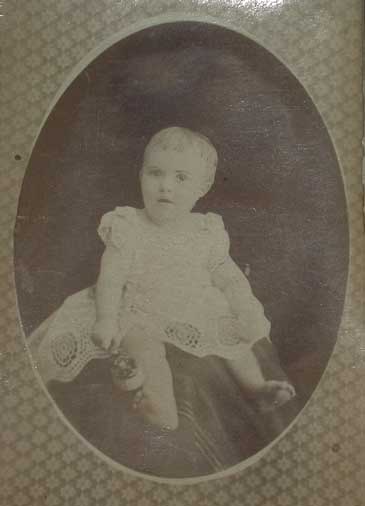
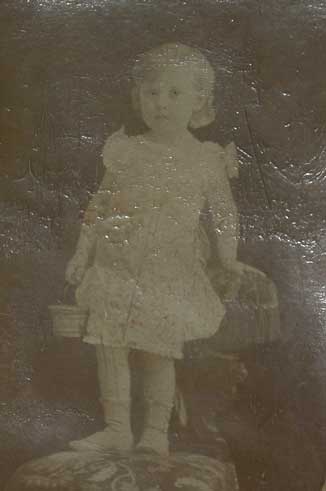
I wanted to pass along that I have yet to hear back from anyone concerning the alleged photographs of James Churchward's daughters nor have I received any substantial new information concerning the 'Great Uighur Empire' as described by my great-grandfather.


I was amazed when I recently looked into my collection of James' papers and discovered another book by Joseph Cserep. The name of the new tome is "UNDE SINT ORTII MEDI PANNONII, PHOENICES, ETRUSCI DE PRIMORDIIS MADYARORUM." This one has not been translated from the Latin, so when time and funds permit, we'll see what can be done to bring more of Dr. Cserep's insights to the world.

There are two letters from Dr. Cserep to James Churchward available the bookstore. The titles are "Ancient Medes as Ancestors of the Magyars of Europe" and "America as the Prehistoric Cradle of the Caucasian Race." These are scanned from the originals and include James' notes in the margins.

In the coming year, without all the renovations to oversee, I look forward to a new website and much more additional content to describe the life of James Churchward and his theories of a lost Pacific Ocean continent that he named "Mu".

Have a great day,
Jack Churchward
Clearwater, Florida

Sunday, October 11, 2009

James Churchward & Woolly Mammoths

The recent news showing the frozen baby woolly mammoth reminded me that my great-grandfather's scrapbooks had articles about woolly mammoths.

In the collection of newspaper clippings that I have labeled as "Scrapbook 2", there are no less than five pages with articles on mammoths. I remember seeing a pamphlet where a private New York society club procured, shipped, prepared and served meat from a mammoth at a dinner. Unfortunately, I have been unable to find the pamphlet, but the fact that James Churchward had this brochure and collected the articles has me almost convinced that perhaps he attended this gala and actually consumed some of the ancient cadaver.


Click on picture for larger version.
Using the order in which they were scanned, the first was a 'photograph' of a man standing next to a 'mammoth' leg.


The second were comparison drawings of ancient mammoths, mastadons and today's elephants.


The next article shows a shovel-tusked Mastadon.
Click on picture for larger version.


Click on image for complete picture.
The next pertinent article was the continuation of the story behind the Buriat woman named Liuba Lattik (pictured left) that served woolly mammoth in her Inn.


Clink on image for complete picture.
This is the article where Russian Inspector Okuntsoff investigated a woman selling 'whale steaks' in far away Siberia. The 'whale steaks' turned out to be from a woolly mammoth that had been dead for thousands of years.


Whether or not James Churchward actually ate ancient mastadon or woolly mammoth meat, I'll probably never know. He was interested in pachyderms and maybe the addition of these scanned images will fuel further debate on whether or not modern man has used the opportunity to taste this ancient culinary oddity.

Jack Churchward
Clearwater, Florida

Sunday, October 05, 2008

October 2008 Update

The yearly update of the state of the research has been released and is contained in Podcast #11.
The podcast and transcript can be downloaded from the podcasts page at:
http://www.my-mu.com/podcasts/

or available from youtube:

Sunday, September 21, 2008

References to the 8th Century Uyghur Khaganate

Here are some references to the 8th century Uyghur Khaganate or Uyghur Empire:

Sinor, Peter, Editor; The Cambridge History of Early Inner Asia; Cambridge University Press; 1994; Chapter 12 pages 317-342.

Barthold, W.; Turkestan Down to the Mongol Invasion; Munishiram Manoharlil Publishers Pvt Ltd; 1992

Grousset, Rene; The Empire of the Steppes a History of Central Asia; Rutgers University Press; 1997

Thursday, September 04, 2008

Bookstore Remodel

I wanted to insert a shameless plug for interested individuals to visit the my-mu.com bookstore at http://my-mu.com/bstore.html. Links on images lead to free previews of the documents.


EBook #1


Lost Gems of The Lost Continent of Mu

Reviews and Correspondence from James Churchward's Scrapbooks


A 70 page E-Book with the complete contents of James' scrapbook entitled "Letters and Reviews" and some pages included from "Clippings."

Preface by Jack Churchward


EBook #2


Ancient Medes as Ancestors of the Magyars of Europe


Translation of letter to James Churchward from Dr. Joseph Cserep of the University of Budapest, Hungary. (March 1929)


Presented for the first time, this 24 page letter has been scanned and reproduced with the original written comments included from James Churchward.


EBook #3


America as the Prehistoric Cradle of the Caucasian Race

Translation of letter to James Churchward from Dr. Joseph Cserep of the University of Budapest, Hungary. (August 1928)

Presented for the first time, this 19 page letter has been scanned and reproduced with the original written comments included from James Churchward.


EBooks on CD


All three EBooks listed above in PDF format on CD shipped to the address you specify for a total of $29.95 ($24.95 + $5 Shipping)

Keep a permanent copy of these EBooks in your collection for only $29.95. No need to download another copy if your hard drive crashes, you will have your own permanent copy. Each book suitable for printing.

Satisfaction guaranteed.

Allow two (2) weeks for delivery.


Tuesday, September 02, 2008

Update on Research for Great Uighur Empire Aug 08

James Churchward believed that the primary colony of Mu was the Great Uighur Empire. For some time, we have been seeking and collecting information on secondary sources to backup what James wrote about it.


Please listen to the latest podcast for the update on our research.

Podcast Video(iPod format)

Podcast Transcript

or catch the YouTube version:


Jack Churchward
Clearwater, Florida

Sunday, July 13, 2008

James Churchward, Engineer


George Jackson Churchward

James Churchward

Albert Churchward


Beginning in 1889, as documented from US Patent Office records, James Churchward started to file for patents on his inventions. As covered in a previous blog entry, James was affiliated with both the Bangor & Aroostook Railroad and the New York Central and Hudson River Railroad Companies, however he was known for his writing and outdoor skills in the performance of those duties.
According to the records from the US Patent Office that I have viewed, James had 31 patents. The first eight are applicable to his work on the railroad. In addition to his two books on the subject of hunting and fishing, James was also a salesman as mentioned in his 1936 biography "My Friend Churchey" by Percy Tate Griffith. It does not seem to be a stretch of the imagination that while on board, his analytical mind saw improvements and acted upon them. This viewpoint is also supported by evidence that James presented a paper, "And Rail Fastenings" to the Society of Railway Superintendents prior to October 1890 [Descriptive index of current engineering literature, Vol 1; Board of managers of the Association of Engineering societies; Chicago, 1892; page 299].

Some drawings from James' Railroad patents


In the obituary of his younger brother Albert, recorded in the London based "The Freemason"[September 12, 1925], mention is made of his inventions:
"Bro. Churchward was the inventor of a hygienic bicycle saddle, improved cycle pedals, and a new process of hardening and toughening steel and armour plates."
Alexander Churchward, James' son, patented 56 new inventions, including "Electrical lighting and battery charge system for vehicles"(1915), "Starting mechanism for internal combustion engines"(1920), and Electric arc welding"(1922). My father, Jack Churchward (and Alex's son) had seventeen inventions, including different welding processes, welding electrode holders, and boat anchors. I remember the boat anchors because from time to time as a kid, I would help out on the line at his shop, cleaning the slag from the welds. I have not been awarded any patents yet (but I'm hopeful).
Another of James' cousins was also an inventor by the name of George Jackson Churchward, Chief Mechanical Engineer of the Great Western Railway in the UK from 1902 to 1922.
I didn't recount the list of inventors with the name Churchward just to toot the family horn. James Churchward, although known as the author of several books about the Lost Continent of Mu, was also an inventor. This posting isn't meant to be an exhaustive study of his inventions (his patents are listed here,) only to indicate to interested readers that my great-grandfather was more than just some spiritualist writer of the early twentieth century.
After his Railroad inventions, all of which were patented using a Brooklyn address, James started to work on Steel. Steel processes and alloys were patented seven years after his railroad inventions. His steel patents were awarded to him starting when he was 55 years old with an address in Manhattan. In the years 1906-1907, he was awarded eleven more patents and three more in 1908. Another piece of the puzzle falls into place when you see the following newspaper clippings:


I have also read about Churchward International Steel in James' biography by Percy Tate Griffith entitled "My Friend Churchey." After reading about it, I went online and made enquiries to the Delaware Department of State to learn more about who the stock-holders were and when the corporation existed, but my letter must have disappeared into that black hole of bureaucracy. I'll be sending another letter in the future to clear up any confusion.


Churchward International Steel Court Transcripts
September 1915
9 Pages
676K
October 1915
9 Pages
648K
May 1917
196 Pages
10.5 M
March 1920
81 Pages
5 M

Even with the pending lawsuit, James still wasn't idle, in 1911, he filed for five more patents on alloys of Steel. As a result of the litigation, James was awarded a large settlement and four years later (1914), his common law wife, Louise (Haier) Churchward purchased 7.22 acres of land in Lakeville, Connecticut. One would imagine that since his un-divorced wife (and my great-grandmother,) Mary Julia, still lived in Boston, he might care to keep the property out of his name. The details of that are best suited for another blog at another time.
Now in 1916, James was 65 years old and had twenty-seven patents under his belt over the past 27 years. For most people that have that type of record, it would be considered a career, but James wasn't done. One notable point is that until 1917, James accorded himself as "a subject of the King of England" in his patent applications. Only in his last four patent applications would he describe himself as a citizen of the United States. At the age of sixty-six, he filed the last four application, the last one being awarded in 1922.
So, because of his career as an inventor and engineer (and the infringement on his patents), he was able to undertake/continue his study of the Lost Continent of Mu, probably starting sometime after 1917, when he finished his last patents. Over the next nine years he was able to gather his notes, research and explore until he released his first (non-hunting/fishing) book entitled "Lost Continent of Mu The Motherland of Man" in 1926 at the age of seventy-five.
These are some facts about the work of James Churchward, engineer & inventor. Another reason to mention the other Churchwards was to provide for full disclosure. The careful reader will notice that George Jackson Churchward worked on railroads as a mechanical engineer and although he was younger than James, it is possible that they knew each other and that James simply helped himself to a little intellectual property and applied for the patents in the United States. As noted in the clipping about Albert his brother, he was also an inventor and patented armour plating in the UK. Some might say that James simply spent those 28 years as an inventor because he helped himself to other people's ideas. While I think I have shown that at least some of his offspring continued inventing (and thereby implying that he had the 'invention' gene), there is other clear evidence to dispel those accusations. Since GJ Churchward worked on locomotives and James appears to have settled on improvements in the tracks and there are references to the James' papers on those improvements, I believe that such rumors can be silenced. Also, there is no evidence that clearly indicates he had any contact with G.J. Churchward, or that James copied his brother's work. As far as their theories about early man (Albert was a prolific lecturer and author), James and Albert were miles apart, but that again is a subject for another blog entry.

Jack Churchward
Clearwater, Florida

Saturday, May 31, 2008

James Churchward & "The Christ Conspiracy" Part 2

When I originally started on the "James Churchward & 'The Christ Conspiracy'" video podcast, it was my intent to simply state that my great-grandfather, James Churchward, would not have endorsed the theories of Acharya S (also known as Dorothy M. Murdock).

The reason for this assertion was that wikipedia, in the article for James Churchward, has the following as part of the entry:
"He is also a source of information for Acharya S, in her two books, The Christ Conspiracy: The Greatest Story Ever Sold and Suns of God: Krishna, Buddha, and Christ Unveiled."
As I researched further, I discovered two examples of what I considered to be intellectual dishonesty in the use of James Churchward's quotes. The quotations were taken out of context and if the entire passage had been included from James, the meaning would be changed significantly, enough to contradict Ms. Murdock.

Subsequently, I wrote the podcast and released it in November 2007. The nasty emails started almost immediately and I shut down the comments section of my blog and set the comments on moderate for YouTube. Everything I wrote was true when it was written. My corporate firewall had categorized her website as 'hate speech' but that has since changed.

This entire affair culminated in YouTube removing the video of the podcast due to 'inappropriate content.' For six months, it was watched by almost 800 folks, but suddenly it became inappropriate in late May 2008. It seems almost humorous for a person who claims censorship (for examples please google acharya s censorship) to use such measures against others.

I hold no ill will against Ms. Murdock or her followers and believe that I have wasted more than enough time and energy on her and her theories. I am not a quitter, but this isn't my fight.


Jack Churchward
Clearwater, Florida

Sunday, April 06, 2008

James Churchward and Space Aliens

Mu-Mu.com: Podcast Eight - James Churchward and Space Aliens
Link to Ipod Video format - Podcast Link


In researching my great-grandfather James Churchward, I am sometimes confronted with references to his works. In some cases, the proposals supported by James words agree in principle with the world view espoused by James. In other cases, such as video games and Science Fiction adventure films, the references to his works are meant as a lark and not part of a scholarly work. Another category encompasses those academic theories that associate James' words and theories with a theory that he did not espouse. This podcast documents yet another example of the use of James Churchward's views. Today I want to address a concept that has leapt from God-knows-where to intersect my time-space continuum. This commentary addresses the links between James Churchward and Space Aliens.

It is true that James Churchward mentions flying cars‚ or vimana in his 1931 book, "Children of Mu," but these accounts were quoted from documents he had seen in India and the ancient tome known as the Ramayana. This ageless book (quoted extensively by James) was, according to legend, written by the sage Valmiki as told to him by Narada about the life story of the Hindu deity, Rama. Please note that although James mentions the aircraft being able to 'circle the earth continuously', at no juncture does he state, imply, infer or otherwise conjecture that these devices leave the atmosphere. Also, there is no mention of extra-terrestrial beings anywhere in any of his published works, neither have I found reference to extra-terrestrial beings in his newspaper clippings. Whatever James thought about Space Aliens or UFOs, he did not write about them.

Now to the event that brought this concept into my space-time continuum. A few years ago I organized a public function and was approached by what appeared to be a quiet, polite young man. He immediately wanted to know if I was 'Jack Churchward' and if I was related to James Churchward. I said yes and continued on with the plans for the function, not thinking that he had further questions. After about ten minutes, I became aware that the nice, polite young man had not left my side and was still following me around. I asked him if there was anything else he needed from me. Imagine my surprise when he, with a completely straight face, asked me if I could put him in touch with the alien mothership that was parked on the other side of the moon with all the Ascended Masters, including James. I told him that I did not know what he was talking about, but my guess is that was the wrong thing to say (or the right thing to say if I did know and was trying to hide the fact.) I gave no further thought to his question and continued working. It took about twenty minutes before I realized that my new best friend was shadowing me and would not relinquish his place behind me. His demeanor and behavior was unnerving. I asked him to please stand someplace else and when he refused, his friends thankfully intervened. It was unfortunate that he was unable to cease his fixation on my person and the location of the mothership because after a short while it became necessary to call the police. I later learned that the young man was eventually admitted to the hospital for psychological evaluation.

I imagine at this point it would be necessary to explain my positions on the young man and Space Aliens. First, had my new best friend backed off and not followed me around so closely, I would have gladly given him some time later to discuss whatever was on his mind. It was not his beliefs, only his behavior, that caused his friends to have him committed. As far as UFOs and/or Space Aliens, I have no first hand knowledge of the mothership on the other side of the moon, neither have I been contacted or personally seen anyone that convinced me that they were extraterrestrial. Having said that, the universe is a big place and it would be awful arrogant to think that humans from earth are the only intelligent species in the vastness of the space.

So how does James Churchward get linked in with the mothership and the Ascended Masters?
I never got to speak with the young man again to find out how James was connected to the mothership, so either it was a product of his deluded psyche, there was some basis in literature or a combination of the two. Therefore, what references to the mothership are out there and what about the Ascended Masters that are on board?

First, allow me to state that before I started looking into this subject, I had no idea that it was such a hot topic on the internet. I have found Galactic histories that go back millions of years, lists of the extraterrestrial beings already here on earth, and the channeled messages from the aliens. The pages where this information is presented appears to be treated seriously by those who wrote them and do not appear to be a fictional representation of any form of game. The source for much of these materials seems to be from channeling, which, unlike James' publications, is the result of the alien being speaking through a human here on earth. There does not appear to be any shortage of material involving the Ascended Masters from outer space, including their pictures and conspiracy theories, but how is James Churchward connected?

It is true that some of James' theories may have been influenced by Madame Blavatsky and Theosophy and that some of her channeled messages come from extra-terrestrial sources, but James never mentioned that he was in contact with or was contacted by masters from another planet. He does reference his encounters with the Rishi, but never suggests that the Rishi was anything but human.

Now in the 1953 book, "Flying Saucers Have Landed", by George Adamski & Desmond Leslie, the passages mentioned above from the "Children of Mu" and the Ramayana is mentioned and quoted. The authors also quote from the "Cosmic Forces of Mu" to establish their points, however, there is no mention that James Churchward talked about their extra-terrestrial origin.

Therefore, if there is further data that shows the connections between the Mothership and my great-grandfather James, I would like to read it and publicize it. It will help me understand where the young man was coming from and bring closure to a bizarre experience

Jack Churchward
Clearwater, Florida

In my research, I have gathered together portions of the Ramayana that James quotes in the "Children of Mu" and added them to the end of this blog entry. The reference to a flying car is incredible for a document so old. Additionally, I have also placed some other incredible things that are mentioned in the Ramayana, such as Hanuman (the Monkey King,) leaping from India to Ceylon (Sri Lanka) or the land bridge that was built by monkeys between Ceylon and India in five days. The story is also told of Hanuman going from Ceylon to the Himalayas and bringing back a mountain for it's healing herbs (and returning it.) Also mentioned is the ten-thousand year reign of Rama as King of Ayodhya.
These incredible feats are in the same text as the more mundane 'flying cars,' and yet the mention of vimanas are provided as a connection between humans and extra-terrestrial beings. Certainly, if the veracity of the Ramayana on the subject of flying vehicles thousands of years ago was trusted, then the feats of the Monkey King Hanuman and his legion of monkey followers should not be in doubt either. If someone believes that vimanas zipped about and unleashed terrible devastation on enemies, then it should also be easy to believe that mountains can be picked up and moved thousands of miles and then put back or that a monkey king can leap hundreds of miles in a single stride.

Research on passages about 'flying cars' in James Churchward's books
Starting on page 186 of the "Children of Mu", James Churchward wrote about the advanced civilization of India and points to some records of ancient 'cars' that are self-powered and can fly. Here are excerpts from the original documents that were quoted:

Book VI - SITA-HARANA - (Sita Lost)

Chapter VII

RAVAN's TRIUMPH

Vain her threat and soft entreaty, Ravan held her in his wrath,
As the planet Budha captures fair Rohini in his path,

By his left hand tremor-shaken, Ravan held her streaming hair,
By his right the ruthless Raksha lifted up the fainting fair!

Unseen dwellers of the woodlands watched the dismal deed of shame,
Marked the mighty-arméd Raksha lift the poor and helpless dame,

Seat her on his car celestial yoked with asses winged with speed,
Golden in its shape and radiance, fleet as INDRA's heavenly steed!

Angry threat and sweet entreaty Ravan to her ears addressed,
As the struggling fainting woman still he held upon his breast,

Vain his threat and vain entreaty, "Rama! Rama!" still she cried,
To the dark and distant forest where her noble lord had hied.

Then arose the car celestial o'er the hill and wooded vale,
Like a snake in eagle's talons Sita writhed with piteous wail,

Dim and dizzy, faint and faltering, still she sent her piercing cry,

Source:
The Ramayana And The Mahabharata Condensed Into English Verse By Romesh C. Dutt (1899)

Quotation from the Ramayana: Book VI - SITA-HARANA - (Sita Lost). (2007, May 14). In Hinduwebsite.com. Retrieved 18:12, May 14, 2007, from http://www.hinduwebsite.com/sacredscripts/hinduism/ramayana/bk06.asp


Another quotation:

Book VI - SITA-HARANA - (Sita Lost)

VII

RAVAN's TRIUMPH

Vain her threat and soft entreaty, Ravan held her in his wrath,
As the planet Budha captures fair Rohini in his path,

By his left hand tremor-shaken, Ravan held her streaming hair,
By his right the ruthless Raksha lifted up the fainting fair!

Unseen dwellers of the woodlands watched the dismal deed of shame,
Marked the mighty-arméd Raksha lift the poor and helpless dame,

Seat her on his car celestial yoked with asses winged with speed,
Golden in its shape and radiance, fleet as INDRA's heavenly steed!

Angry threat and sweet entreaty Ravan to her ears addressed,
As the struggling fainting woman still he held upon his breast,

Vain his threat and vain entreaty, "Rama! Rama!" still she cried,
To the dark and distant forest where her noble lord had hied.

Then arose the car celestial o'er the hill and wooded vale,
Like a snake in eagle's talons Sita writhed with piteous wail,

Dim and dizzy, faint and faltering, still she sent her piercing cry,

Source:
The Ramayana And The Mahabharata Condensed Into English Verse By Romesh C. Dutt (1899)

Quotation from the Ramayana: Book VI - SITA-HARANA - (Sita Lost). (2007, May 17). In www.sacred-texts.com. Retrieved 19:12, May 17, 2007, from http://www.sacred-texts.com/hin/dutt/rama06.htm


Book X - The War in Ceylon

Chapter XI


RAVAN'S THIRD BATTLE AND FALL

Long and dubious battle lasted, shook the ocean, hill and dale,
Winds were hushed in voiceless terror and the livid sun was pale,

Still the dubious battle lasted, until Rama in his ire
Wielded BRAHMA'S deathful weapon flaming with celestial fire!

Weapon which the Saint Agastya had unto the hero given,
Winged as lightning dart of INDRA, fatal as the bolt of heaven,

Wrapped in smoke and flaming flashes, speeding from the circled bow,
Pierced the iron heart of Ravan, lain the lifeless hero low,

Quotation from the Ramayana: Book X - YUDDHA - (The War in Ceylon). (2007, May 14). In Hinduwebsite.com. Retrieved 18:15, May 14, 2007, from http://www.hinduwebsite.com/sacredscripts/hinduism/ramayana/bk10.asp


Another quotation:

Book X - The War in Ceylon

Chapter XI

RAVAN'S THIRD BATTLE AND FALL

Long and dubious battle lasted, and with fury wilder fraught,
Wounded, faint, and still unyielding, blind with wrath the rivals fought,

Pike and Club and mace and trident scaped from Ravan's vengeful hand,
Spear and arrows Rama wielded, and his bright and flaming brand!

Long and dubious battle lasted, shook the ocean, hill and dale,
Winds were hushed in voiceless terror and the livid sun was pale,

Still the dubious battle lasted, until Rama in his ire
Wielded BRAHMA'S deathful weapon flaming with celestial fire!

Weapon which the Saint Agastya had unto the hero given,
Winged as lightning dart of INDRA, fatal as the bolt of heaven,

Wrapped in smoke and flaming flashes, speeding from the circled bow,
Pierced the iron heart of Ravan, lain the lifeless hero low,

Quotation from the Ramayana: Book X - YUDDHA - (The War in Ceylon). (2007, May 17). In www.sacred-texts.com. Retrieved 19:15, May 17, 2007, from http://www.sacred-texts.com/hin/dutt/rama10.htm


When morning dawned, Rama, taking the car Pushpaka given to him by Vibhishana, stood ready to depart. Self-moving was that car, and it was very fairly pointed and large; two stories it had, and windows and flags and banners and many chambers, and it gave forth a melodious sound as it coursed along the airy way.


Quotation from the "Ramayana. The story of Rama", as translated and retold by Professor Ananda K. Coomaraswamy. (2007, May 14). In galileolibrary.com. Retrieved 18:19, May 14, 2007, from http://www.galileolibrary.com/ebooks/as10/ramayana_page_41.htm


Other things mentioned in the Ramayana:

  • Hanuman leaps from India to Ceylon to find Sita.
    Then Hanuman roused himself, and the monkey host rejoiced. Swelling with pride and might, he boasted of the deed he would accomplish. Then he rushed up the mountain Mahendra, shaking it in his wrath and frightening every beast that lived in its woods and caves. Intent upon achieving a hard task, where no friend could help and no foe hindered, Hanuman stood with head uplifted like a bull, and praying to the sun, to the mountain wind, to the Self-create and to all beings, he set his heart in the work to be accomplished. He grew great, and stood, like a fire, with bristling hair, and roared like thunder, brandishing his tail; so he gathered energy of mind and body. "I will discover Sita or bring Ravana away in chains," he thought, and therewith sprang up so that the very trees were dragged upward by his impetus and fell back again behind him. He hurtled through the air like a mountain, his flashing eyes like forest fires, his lifted tail like Sakra's banner. So Hanuman held his way across the ocean. Nor, when the friendly ocean lifted up Mounta Mainaka, well wooded and full of fruits and roots, would Hanuman stay to rest, but, rising up, coursed through the air like Garuda himself. Then a grim rakshasi named Sinhikha rose from the sea and caught him by the shadow, and would devour him; but he dashed into her mouth and, growing exceeding great, burst away again, leaving her dead and broken. Then he perceived the farther shore, and thinking his huge form ill-fitted for a secret mission, he resumed his natural size and shape, and so alighted on the shore of Lanka, nor was he ever so little wearied or fatigued.


    Quotation from the "Ramayana. The story of Rama", as translated and retold by Professor Ananda K. Coomaraswamy. (2007, May 14). In galileolibrary.com. Retrieved 18:01, May 15, 2007, from http://www.galileolibrary.com/ebooks/as10/ramayana_page_20.htm


  • The bridge from India to Ceylon was built in five days by monkeys.
    Now all the monkeys, following Nala's orders, gathered trees and rocks and brought them from the forests to the shore, and set them in the sea. Some carried timber, some used the measuring-rods, some bore stones; huge was the tumult and noise of crags and rocks thrown into the sea. The first day fourteen leagues were made, and on the fifth day the bridge was finished, broad and elegant and firm -- like a line of parting of the hair on Ocean's head. Then the monkey host passed over, Rama and Lakshman riding upon Sugriva and Angada. Some monkeys went along the causeway, others plunged into the sea, and others coursed through the air, and the noise of them drowned the sound of the ocean waves.

    Quotation from the "Ramayana. The story of Rama", as translated and retold by Professor Ananda K. Coomaraswamy. (2007, May 14). In galileolibrary.com. Retrieved 18:06, May 15, 2007, from http://www.galileolibrary.com/ebooks/as10/ramayana_page_25.htm


  • Hanuman goes from Ceylon to Himalaya and brings back a mountain for its healing herbs. Then, he brings the mountain back to its original location.
    Then Hanuman roared and sprang; and he passed across the sea and over hills and woods and rivers and cities till he came to Himalaya and beheld its hermitages. He ranged the mountain, but the herbs were hidden from him; and angered and impatient, Hanuman rooted up the whole mountain and sprang with it into the air and returned to Lanka, welcomed by all the host. And the slain and wounded monkeys rose up whole, as if from restful sleep, healed by the savour of the four medicinal herbs. But all the slain rakshasas had been cast into the sea. Then Hanuman took the mountain-peak again to Himalaya and returned to Lanka.

    Quotation from the "Ramayana. The story of Rama", as translated and retold by Professor Ananda K. Coomaraswamy. (2007, May 14). In galileolibrary.com. Retrieved 18:11, May 15, 2007, from http://www.galileolibrary.com/ebooks/as10/ramayana_page_33.htm


  • Rama ruled as King of Ayodhya for ten thousand years.


    Then Rama governed Ayodhya for ten thousand years; and at length it came to pass that Sita had conceived. Then Rama asked her if she had any longing, and she replied that she desired to visit the hermitages of the sages by the Ganges; and Rama said: "So be it"; and the visit was fixed for the morrow.


    Quotation from the "Ramayana. The story of Rama", as translated and retold by Professor Ananda K. Coomaraswamy. (2007, May 14). In galileolibrary.com. Retrieved 18:16, May 15, 2007, from http://www.galileolibrary.com/ebooks/as10/ramayana_page_45.htm


Flying cars are mentioned in the Ramayana, but there are no references to leaving the atmosphere or travelling to different planets. Along with the terrible weapons and flying cars, they also ascribe to other magical phenomena, as indicated above. If the references to flying cars are to be taken seriously, then the examples of extraordinary behavior cited above (and the ones not cited in the text) are to be taken seriously as well. If the flying cars are real, then so are the other fantastic claims.

<>© 2008 Churchward & Company, Inc.

Sunday, January 20, 2008

A Big Game and Fishing Guide to Northeastern Maine

image of cover

While I was browsing the internet the other day, I came across 'A Big Game and Fishing Guide to Northeastern Maine', one of two books that I thought I would never see by my great grandfather, James Churchward. It had been scanned by the folks at Google and is part of their online repository of old books at: books.google.com. A great many old books are available and can be downloaded in either plain text or pdf format. This particular work from 1897 has nothing to do with old legends, ancient history, or lost continents, but does provide a glimpse of how well acquainted James was with hunting and fishing.
The book was issued under the Bangor & Aroostook Railroad banner and credit is given to James Churchward as author. The work was produced in support of Maine tourism (and riding the B&A Railroad) and targets the hunting and fishing sportsmen of the northeast US. James did work on the railroad as a salesman as mentioned in the 1936 biography, "My Friend Churchey" by Percy Tate Griffith and he also designed and patented railroad hardware between 1889 and 1893 as can be seen in the seven patents he was issued during that time. P.T. Griffith also mentions on a number of occasions that James was a great fisherman and this work is confirmation of that fact. Also mentioned in the work is James' past as a hunter in India. In the introduction on page 8, he says:

"We have hunted tigers, elephants, buffalo and other big game in India, but nothing in our experience surpasses the ugliness and wickedness of a wounded bull-moose when he turns on you, which fortunately does not often happen, for, like most other large animals, they will try to get off, even when wounded."

The rustic images portrayed in the photographs from the book and the written text bring alive a different era, one that has disappeared except through the pages of this book and books like it. It was an era where a broad segment of the population knew how to use guns and fishing tackle, something that the urbanization of the United States over the past 110 years has diminished considerably. While the use of firearms throughout the history of the United States has sometimes been contested, the written text provides the reader a look inside the mind of a 19th century sportsman and his thoughts on the subject. (As a point of reference, a table provided in the book [page 120] details the 'Game Record.' In the four year period between 1894 and 1898, 7,767 deer were shot and transported via the railroad, either to be stuffed or brought home for sustenance. This number did not count the number of animals brought down for food in the hunting camps or for the local population. This number does not include the Caribou or Moose that were transported via the railway.)
Although primarily a vehicle for advertising, James treats the reader to his heart-felt ideas on how to bring down big game in the woods or carefully hook and land the biggest fish. The reader will also enjoy the drawings of wildlife and their habitats that accompany the photographs and written instructions and for those that have read any of James' other works, they will recognize the characteristics of his illustrations. First, he sets the stage by introducing the reader to the various locales and what might be expected there. With this discussion, he introduces the reader to guides and camps to be contacted, distances to traverse and special areas to keep in mind. The descriptions provided in the book leave the reader with no doubts that the author travelled to these places and undertook the activities he so vividly describes. This chapter ends with a list of Taxidermists and places to stay.
The next chapter details fishing. James covers the species, their habits and where they might be found. Illustrations of each variety are also produced for easy identification. James also provides an in-depth discussion about tackle, rods, reels, and even the clothes to bring along. He also engages in a discussion of the best way to sink the hook and land the biggest fish. Special sections are devoted to the "Science of Trolling" and "Hints to Young Fishermen." In the later, he states:

Bear in mind that you are fishing with a rod and a flimsy thread, not with a telegraph pole and a clothes line.
Your line should be a rein to guide the fish to you, not a hawser to haul it there.

The next chapter details the species of game and hints to bring them down. James discusses different places to shoot the game, with the final admonishment to 'whenever the opportunity offers, take the shoulder shot, and make it well down and forward.' Also, James describes the best outfit to obtain, from footwear to hats. In addition to a hunting knife (not double-edged), he suggests a holstered revolver (38 or 44 caliber) and has a whole section on selecting rifles and shooting them. Just before the chapter is completed by a list of registered guides, the author suggests the latest in bedding for sleep comfort.
The next chapter is devoted to the game laws of Maine, followed by the aforementioned 'Game Record', rates for the B&A Railroad to various points, and stage (coach) connections.
This book adds another dimension to the life of James Churchward and shows that he was a man of his times. Remembering that he was born in 1851, this book was researched and authored while he was in his late forties and from all appearances, he had the energy, drive, and stamina to negotiate the uncharted wilderness. These characteristics would be needed later when he had settled his lawsuits with 'Big Steel' and had the time and finances to pursue his study of old legends, ancient history, and lost continents.
btw, the title of the other book that I thought I would never see is "Copies of Stone Tablets Found by William Niven at Santiago Ahuizoctla Near Mexico City" published in 1927 and that volume is also listed in the same Google repository, although no scanned copies are available, nor do any of the book sources listed have a copy for sale, nor do any libraries show a copy available. This book would be an invaluable addition to any research library engaged in studying Niven's tablets as mentioned in James books after 1930.
Another book by James Churchward has also been revealed during recent research:
"Fishing Among the 1,000 Islands of the St. Lawrence" by James Churchward (New York Central and Hudson River Railroad Company; 56 pages; 4 track series. Printed by American Bank Note Co (1894))
This book is also listed by Google Books, however there are no copies available.
Jack Churchward
Clearwater, Florida

Friday, January 11, 2008

Mustafa Kemal Ataturk, Tahsin Mayatepek & Mu (Part 1)


Mustafa Kemal Ataturk

James Churchward


For a long time I had been aware from speaking with people and emails that Mustafa Kemal Ataturk, the first President of the Republic of Turkey was a sincere believer in the theories of James Churchward and the common origin of man in the now sunken continent of Mu. For over a year I have been searching for information on the research that Ataturk undertook with regards to the 'Great Uighur Empire' as detailed by my great grandfather in the 'Children of Mu.' [Please note that this is an ongoing effort to research the sources of stories about the 'Great Uighur Empire' and is carried out on the 'Great Uighur Empire' mailing list, details of which can be found here: http://mail.my-mu.com/mailman/listinfo/gue_my-mu.com]
Well, finally I have been provided some clues.
Recently, a reader wrote to inform me that Ataturk had sent the historian, Tahsin Mayatepek to serve as the Turkish Ambassador to Mexico and that while he was there he was tasked with researching the similarities between the Turkic people and the Mayas. Also, Tahsin wrote five reports on the Turkic origins of Mayan civilization. This person has graciously agreed to translate these reports into English. As soon as I have obtained the English translations, they will be placed on the website under resources.
Also, I have also discovered the name of an author Sinan Meydan that has written books on the subject of Ataturk and his study of the lost continent of Mu. I have yet to contact him, but when I do, I'll pass along what I learn.
There are other theories competing with the theory of the Turkic roots of the Mayan civilization. For instance, there are several scholars and their works that postulate that Africa was the source of Mesoamerican civilization. These scholars point at the 'African features' of Olmec statues, introduced botanical evidence (the bottle gourd), and linguistic elements linking the African continent to Mesoamerica.
Another theory elucidates that Vedic influences in India served as the basis for culture and civilization for Mesoamerica and likewise it has been postulated that the Tamil people from Sri Lanka and southern India first brought their culture and civilization to Central America. Certain architectural features and linguistic content are used to provide the proof of these hypotheses.
Another theory insists that the Chinese were the true source of culture and civilizations for Mesoamerica. This ideology was also backed up with artifacts. Niven found what he termed a 'Chinaman' statue in his excavations in Mexico and an image was reproduced by James Churchward in his book "The Lost Continent of Mu Motherland of Man" (1926), "The Lost Continent of Mu"(1931.)


Relics from Niven's Lowest City
1. Egyptian head. 2. Ancient Grecian vase
3. A toy. 4. Little Chinaman


Today's standard theory of the origin of the people inhabiting the Americas is that there was a migration through the land-bridge through the Bering Straits or in small boats along the Pacific coastline from Asia. Of course, as the standard hypothesis, these theories are rejected almost immediately in favor of some of the other lines of research indicating long oceanic voyages or from the lost continents of Atlantis, Mu, or Lemuria. Even the dates of the earliest arrivals are a contentious issue. Based on archaeological evidence available when the theories were first postulated, the human presence in the Americas was dated to 10,000 years ago. When finds were made that pushed back these dates, the original theory became a conspiracy and those that had stated it were hiding the truth.
The purpose of my research into the theories of James Churchward and the Lost Continent of Mu is to understand and interpret the evidence to reach a solid, defendable foundation of knowledge. Do artifacts from the Topper Site in South Carolina bear any resemblance to artifacts from the European Solutrean culture? Is there reason to believe Dr. Goodyear when he states that there are European influences in pre-Clovis sites in the Americas? Does the genetic evidence retrieved from the Windover site in eastern Florida indicate a heretofore unknown people? What about the age of some of the South American sites that predate any sites in North America, where did those folks come from? Does any of this mean that the European influences were derived from colonies of Atlantis before it sank or are these the remnants of the colonies of Mu?
There are still many questions to be answered and probably even more to be asked. The veil surrounding the theories researched by Ataturk regarding the Great Uighur Empire and the Turkic origin of mankind will hopefully be lifted soon and serve as a starting point for further understanding.
Lastly, let me state that I have the utmost respect for the final resting place for everyone that came before us. I understand the concern felt by some that the respect due them has not always been shown to the remains of Native Americans and I share their concern that disturbing their remains is against their wishes. However, I would be remiss if I did not mention that our knowledge of the people inhabiting the Americans is fragmented at best. One or more groups/tribes can trace their ancestry to a certain location for hundreds of years and while it is understandable that they do not wish for their ancestors to be dug up, the fact remains (i.e., the remains discovered at the Windover Bog site or the Kenewick Man), that the remains of some folks are not related to the people who were here when the European settlers arrived. With the laws on the books today, any research into finding out who some of the other peoples were is forbidden. Were more remains found today, archaeologists are not able to even test to discover whether or not they are related to the people known as 'native Americans.' Therefore, until something can be worked out to be able to research the peopling of the Americas, science takes a back seat to political correctness. My concern is that if someone does find the remains of colonists from Atlantis or Mu that date back ten or twelve thousand years, the find must be covered and everyone loses the knowledge which might tell us the truth, instead of the fragmented truth that is known today.
Jack Churchward
Clearwater, Florida

Sunday, November 25, 2007

James Churchward and "The Christ Conspiracy: The Greatest Story Ever Sold"


In researching my great-grandfather James Churchward, I am sometimes confronted with references to his works. In some cases, the proposals allegedly supported by James' works agree in principle with the world view espoused by James. In other cases, such as video games and Science Fiction adventure films, the references to his works are meant as a lark and not part of a scholarly work. Another category encompasses those academic theories that use James' words to prove something that contradicts James' world views and beliefs. This is the subject of this commentary podcast. While there are numerous examples, today I want to address a specific instance of an author using James' works to prove a theory that he himself (that is, James Churchward) did not espouse. Therefore, please watch this video rebuttal entitled:

James Churchward and
"The Christ Conspiracy: The Greatest Story Ever Sold"

The video was removed by the folks at YouTube because after six months it became 'inappropriate content' when 'someone' flagged it. However, the folks at MySpace have not yet banned it, so here is a link: Video Podcast


If you believe that the author's work did not deserve this scrutiny or that I have somehow offended someone's sensibilities (or heaven forbid, been politically incorrect,) please leave a comment on the my-mu.com blog at jameschurchwardsmu.blogspace.com. If you wish to respond with a video comment of your own, please post a link to it on the same blog. Angry or insulting comments will be ignored (and perhaps removed.)

Sunday, November 04, 2007

October 2007 Update

This past year has been busy. Since our last podcasts were released in Spring of 2007, we have continued to collect data and continue the research.

First, the publication of Podcast # 5 revealed some photos purported to be daughters of James Churchward and we sought to have the young ladies in these photos identified. If you have yet to view these pictures, please check them out in our Blog, in podcast #5, or under Blogs of Note in the Interactive media portion of our website. If these young ladies are related, there may be old, unpublished manuscripts sitting in a box somewhere in the attic.

Second, Podcast #4 presented some purported ancient relics of Mu which turned out not to be as ancient as labeled. Our podcast also called on interested parties with knowledge of any other evidence of the lost continent of Mu to come forward and allow them to be analyzed. That offer is still open.

Third, while there has been a great response to the 'Great Uighur Empire' discussion forum and many private emails concerning this subject, we are still asking for any information that substantiates James' theories of that 'Great Uighur Empire.' Please visit our interactive media page for the link to Great Uighur Empire discussion mailing list and tell us what you know.

In the past year we have received court transcriptions of the proceedings where James sued to have his intellectual property rights respected. These were in regard to his contribution to armor-plating that was used on US warships during World War I. These documents illuminate another side of James Churchward and show that he was not just a crackpot with no scientific background. The scanned pdfs are linked from our resources page.

More research has also gone into an expanded and updated version of the 1927 'Lost Continent of Mu Motherland of Man' that will be published in the near future. By correlating the original text with information contained in his scrapbooks and other reference materials, we believe that for the first time in over eighty years new insights into James' theories are now available. We are undeterred by the knowledge that others have also started to republish James' works because our versions will contain the full text as well as further information and notes that are unavailable in any other version.

It has been a year that our bookstore has been open, please stop by and have a look.

Sunday, April 15, 2007

Podcast #5 Is online

Recently found pictures purport to be the daughters of James Churchward.
Do you recognize these pictures? If so and you are related, maybe someone in your family has a box in the attic with unpublished manuscripts by James Churchward.


For further information, watch Podcast #5

Also available on Youtube:


Monday, March 19, 2007

Relics of Mu


Recently Discovered Pictures of Relics of Mu are covered in Podcast 4. Link to podcast is here


A picture of one of the vessels appeared in the
1931 "Lost Continent of Mu"

Friday, December 15, 2006

Welcome Message Converted

The My-Mu.com Welcome Message has been converted and placed in youtube.
See below:

Sunday, December 03, 2006

The Cascajal Block and the Lost Continent of Mu

  
Cascajal Block and Symbols


In September 2006, Science Magazine published a paper entitled "Oldest Writing In the New World". The item of note in the article and most widely reported was that the block showed what appeared to be a sample of the oldest writing ever found in the Americas. As this discovery took place in a location where William Niven had unearthed artifacts and relics in the early 20th century and some of these items were subsequently used as evidence by James Churchward of ancient civilizations - then this new discovery might have some bearing on my research.

The questions I want answered are:


1. How close were the discoveries by Niven to the Cascajal Block?

2. Does this ancient script have similar characters to the symbols discussed in the books by James Churchward ?

3. Does this new discovery prove, disprove, or have no bearing on the theories of James Churchward ?


In answering questions about William Niven and his digs in Mexico - I turned to the biography of William Niven entitled: "Buried Cities, Forgotten Gods."[Wicks and Harrison; Texas Tech University Press]

In the 1890s, Niven excavated ruins in Guerrero and brought out statues and artifacts. In 1910, Niven unearthed tablets in Placero del Oro and conducted surveys over two thousand square miles in the Valley of Mexico. He finally confined his excavations to an area north of Mexico City. His fifteen years of work brought many beautiful relics and artifacts to light. Niven's discoveries were not all without controversy, but no evidence was ever produced implicating Niven. According to James Churchward's own words - the tablets he based his theories on were from the Valley of Mexico, so the artifacts from his digs in Guerrero are outside the sphere of this discussion.


Niven's Tablet #1584

It is true that the 1926 'Lost Continent of Mu, Motherland of Man' had an entire chapter entitled "Niven's Buried Cities," but James' first contact with Niven was after the publication of the first book (September 19, 1927.) Their relationship, as determined from correspondence, is covered in "Buried Cities, Forgotten Gods." In 1928, Niven sent rubbings of some 2500 tablets from the Valley of Mexico to James. These were translated by James and found their way into the 1931 "Lost Continent of Mu" and the 1931, "Children of Mu." I have seen references to these rubbings having been published, however I am not aware of the location of the original or reproductions thereof. Whether or not James' interpretation was valid is left to different research, the preceding is background information to help calculate the distance between discoveries.

One location cited in the Mexico Valley was Atzcapotzalco (19.4889N 99.1836W.) The Cascajal Block was found in Cascajal, Veracruz-Llave (17.9500N 95.1167W). Using an online latitude/longitude calculator (http://jan.ucc.nau.edu/~cvm/latlongdist.html) and would place them 286.9 statute miles apart.
Link to Google Search for Maps of Mexico.


In answering question #2, I perused the 1926 Lost Continent of Mu, Motherland of Man, a 1969 reprint of the 1931 Lost Continent of Mu, a 1988 reprint of the 1959 printing of Children of Mu (originally published in 1931,) and the 1988 reprint of the 1960 printing of the Sacred Symbols of Mu (originally published in 1933.)

I could find no direct matches between the symbols on the Cascajal Block and any symbol in the aforementioned books. I looked at the symbols contained in the creation myth, I looked at the tables of primitive symbols and hieratic characters and I looked at the depictions of rock carvings.


Cascajal Block Symbol #53

Symbol from
Lost Continent of Mu (1931) page 53

The closest a symbol came to resembling a symbol in James Churchward's books is #3[& 16, 45, 53, 59.] The symbol at the top is referenced in numerous places as "Lands of the West" (Lost Continent of Mu, Motherland of Man page 53). The oblong shape beneath is not part of Churchward's theories. Michael Everson, on his website analysis of the Cascajal Block (http://www.evertype.com/gram/olmec.html) identifies the symbol as a pineapple, which is as good an explanation given the other symbols on the tablet.

Given that 28 (or 30 as interpretated by Michael Everson) unique symbols found on the Cascajal Block only one remotely resembles a symbol from an ancient civilization, then I would have to answer that there is no correlation between the symbols on the Cascajal Block and symbols discussed by James Churchward.


Does this discovery prove, disprove or have no bearing on the theories of James Churchward ?

Having no matches between the Cascajal Block symbols and those found in James Churchward's works does not prove or disprove anything, nor does the distances between where the objects were found. It might be said that the age of the artifacts could be different and that could account for the differences. Unfortunately, the Cascajal Block has no bearing on proving or disproving the theories of James Churchward, but still is an object to be studied in the hopes that one day, its secrets will be revealed to the world.


Further Links


Jack Churchward
Clearwater, Florida

Sunday, November 12, 2006

Memorial Day 2006 Weekend with Uyghur Friends

Over Memorial Day weekend, we were fortunate enough to to meet with some Uyghur friends living in the United States. Uyghur people live in many countries now, not only the Xinjiang Province of the People's Republic of China. We have been very fortunate to become exposed to Uyghur culture and develop some lasting friendships among the Uyghur people. I must also acknowledge my Tibetan, Mongolian, and Taiwanese friends because we all share a common vision.

There were a few reasons for our visit. While Cindy met with some Tibetan friends and received teachings from wonderful Rinpoches, I had hoped to meet with the man that translated and published the Lost Continent of Mu" into the Uyghur language. Unfortunately, he was not present, but I do have a copy now. More on the Uyghur language version of the "Lost Continent of Mu" in another posting.

Another reason was to interview an Uyghur historian friend about his thoughts about the "Great Uighur Empire." The theory about the 'Great Uighur Empire' occupies a whole chapter of the 1931 "Children of Mu," by James Churchward. The 'Great Uighur Empire' (as referenced by James) predates the historical Uighur Empire and is identified as the "Primary / First' colonial empire of the Land of Mu. James also states that 'the history of the Uighurs is the history of the Aryan Race.' James uses a reference from a Tibetan monastery to indicate that the Naacals brought copies of the Sacred Inspired Writings to the Uighur capital some 70,000 years ago. So, some time prior to this, the Empire was started. He goes on to explain that the cataclysm that raised the mountains ended the Uighur Empire and separated the Uighur peoples. This cataclysm, as described in James' writings, roughly corresponds to the Biblical flood.
One element of his theories involves the origin of the Chinese people and reflects a philosophy some today may find repugnant. Using a stereotypical white superman (the Uighurs) and stereotypical brutish savage (the Mongols) as parents, the Chinese people were developed. In two paragraphs, James gathers the racial prejudices of the 1920s & 30s and denigrates entire races of people with a stroke of his pen. While these stereotypes may be acceptable for the popular culture of the late 19th and early 20th century, the truth as documented indicates a different picture of the Mongols. Of course, if you only read the Persian accounts of Genghis Khan, you might believe the stories. Apart from reading numerous Asian and Central Asian history books, my experiences with the Mongolian people has also been personal. I have seen no evidence that my Mongol friends were not equals or are somehow different - I find these theories as offensive as my friends would.

I have read about the historical Uighur Empire that existed in what is now known as Mongolia and eventually migrated to Central Asia. The history of Central Asia is the history of the Uighurs - the Uighur people are a distinct, vibrant cultural element of Central Asia. Whether you examine the role of Uighur scholars in Genghis Khan's court as administrators, peruse the artistic wonders of their architectural accomplishments involving the Buddhist, Christian or Islamic periods, or read translations of the numerous written works on medicine, history or just their humor, one cannot but realize the unique and vital contributions of the Uighur people to history. Currently, the majority of the Uyghur people live under the rule of the Chinese government. I would be remiss were I not to mention that this centuries-old culture is under attack - Uyghur language text books are banned from classrooms and book burnings have consumed thousands of books, just for being correct about history. Aside from the Chinese government propaganda that equates an Uyghur identity with terrorism, there is not truth in this stereotype either. I also know this from personal experience.

Now that I have painted a brief picture of James' theories versus what I have learned, it should be easy to see why I wanted to speak with my Uyghur historian friend. Due to contractual obligations and family safety, he was reluctant to be interviewed for a podcast or have his name mentioned. We did spend an evening together and talked about this subject. He said he also had a copy of the Uyghur language translation of "The Lost Continent of Mu" and had been conducting his own research into this topic. 'Erkin' is a methodical researcher with impeccable credentials - I expect his research to be the definitive answer when it is published.

So I am left with no further references from independent sources concerning James Churchward's claims about 'The Great Uighur Empire.' There is one article in one of James' scrapbooks that gives reference to Koslov but I was hoping to gather further sources. This theory was also studied by the father of the Turkish nation, Mustafa Kemal Ataturk.

To continue this study of the 'Great Uighur Empire,' I call on interested parties to send your ideas, comments, and references to a common location - open and available for viewing by everyone. Please add your comments below, or send your contribution to gue-list@my-mu.com - a new mailing list with an open subscription policy. If you have something to discuss or just want to read the results, please join here.

Sunday, October 29, 2006

Research Update - October 2006


This past summer has been busy at my-mu.com, although unless you have visited the website, you may not have noticed it.
First, information about James Churchward and his theories of a lost Pacific Ocean continent continues to stack up here. Here are some of the high-points, each will be addressed in a separate posting to our blog and/or occupy a new and unique webpage.
    1. We had the opportunity to visit with some Uyghur friends over Memorial Day weekend. In addition to speaking with Uyghur historians, we had also hoped to sit down and speak with the publisher of the Uyghur language translation of the "Lost Continent of Mu," however that did not work out. One Uyghur historian that we spoke with has been researching the findings of James Churchward with regards to the Great Uighur Empire and mentioned that he had found reference to a continent of Lu in an ancient Buddhist document.


    2. Although we had heard about the Uyghur language translation of the "Lost Continent of Mu," we had not seen a copy. We now have a copy from Kazakhstan.

Uyghur Language version of
The Lost Continent of Mu


"Olga Muriel"
born 1873
    3. Pictures purporting to show two of James' daughters have surfaced, however all we have are the pictures and names. However, according to census documents and family history, James' only children were Alexander and his brother who died in infancy in Sri Lanka (or Ceylon as it was then known.) Hopefully with the power of the internet, we can track down and meet our newly discovered relatives.

"Gladys Stella"
born 1874


Frontispiece from Lost Continent of Mu
1988 Paperback
    4. Pictures of ancient 'relics' of Mu have surfaced. In addition to the vessel portrayed inside the 1931 "Lost Continent of Mu," there are also some other relics that have not been seen by the public.

"Relics" from Mu


Niven's Tablet #1584
    5. An ancient tablet from Veracruz, Mexico has made the news. While we have not done an exhaustive study of the images on the tablet and compared them to those images found by Niven, the results from a preliminary investigation will also be addressed. Please be aware that we do not have the tracings sent by Niven to James of the 2600 tablets, however there is a lead to where the images were published by James in 1927.

Discovered tablet from 2006


To keep up-to-date on our research, please join our
announcements mailing list
which can be accessed from our interactive media page on our website. This is a low volume mailing list that promises to keep the number and size of emails small and to the point; we don't like spam either.


Second, there has been a complete update of my-mu.com. The old frames version of the website is gone and has been replaced with an easier, more accessible version. We have added a new section on James Churchward's research materials that contain thumbnails of each of the pages. While these may not be entirely legible, at least one of the thumbnails is an active link that will take you to a full-size scan of that sheet. To keep things interesting, the link will periodically change.


We are also posting articles by James that are being transcribed from his research materials. The first such article entitled "The Sun is Not a Superheated Body, He Declares," has provoked discussion. And some of his other works when released will also likely continue to challenge the status quo and bring the theories of James Churchward into focus.


Lastly, we are pleased to announce the immediate availability of three never before published elements of James Churchward's research materials. As described by Percy Tate Griffith in his biography of James, "Churchey" as he was known, was in contact with thousands of people across the globe. "Lost Gems of the Lost Continent of Mu: Reviews and Correspondence from James Churchward's Scrapbooks Volume 1 is partial evidence of the vast network of his contacts. A free preview is available online at the My-Mu.com Bookstore.


Additionally, two translated letters from Doctor Joseph Cserep of the University of Budapest are now available for the first time. "America as the Prehistoric Cradle of the Caucasian Race," translated from the Latin is a 19 page document written in August 1928. "Ancient Medes as the Ancestors of the Magyars of Europe", translated from the original Magyar manuscript is a 24 page document written in March 1929. As with the "Lost Gems of the Lost Continent of Mu," free previews are available at the My-Mu.com Bookstore.


These works are available in full color in Adobe Acrobat (pdf) format. Printed versions will be considered if the demand exists.


And finally, as a side-note:


Some individuals have copied pages, information and pictures from my-mu.com and added them to their own internet sites, as if the materials were in the public domain. This complete disregard for our intellectual property rights will be addressed to the fullest extent of the law. If you wish to use materials from www.my-mu.com on another website, please send us an email and maybe we can work something out, but please obtain written permission first.